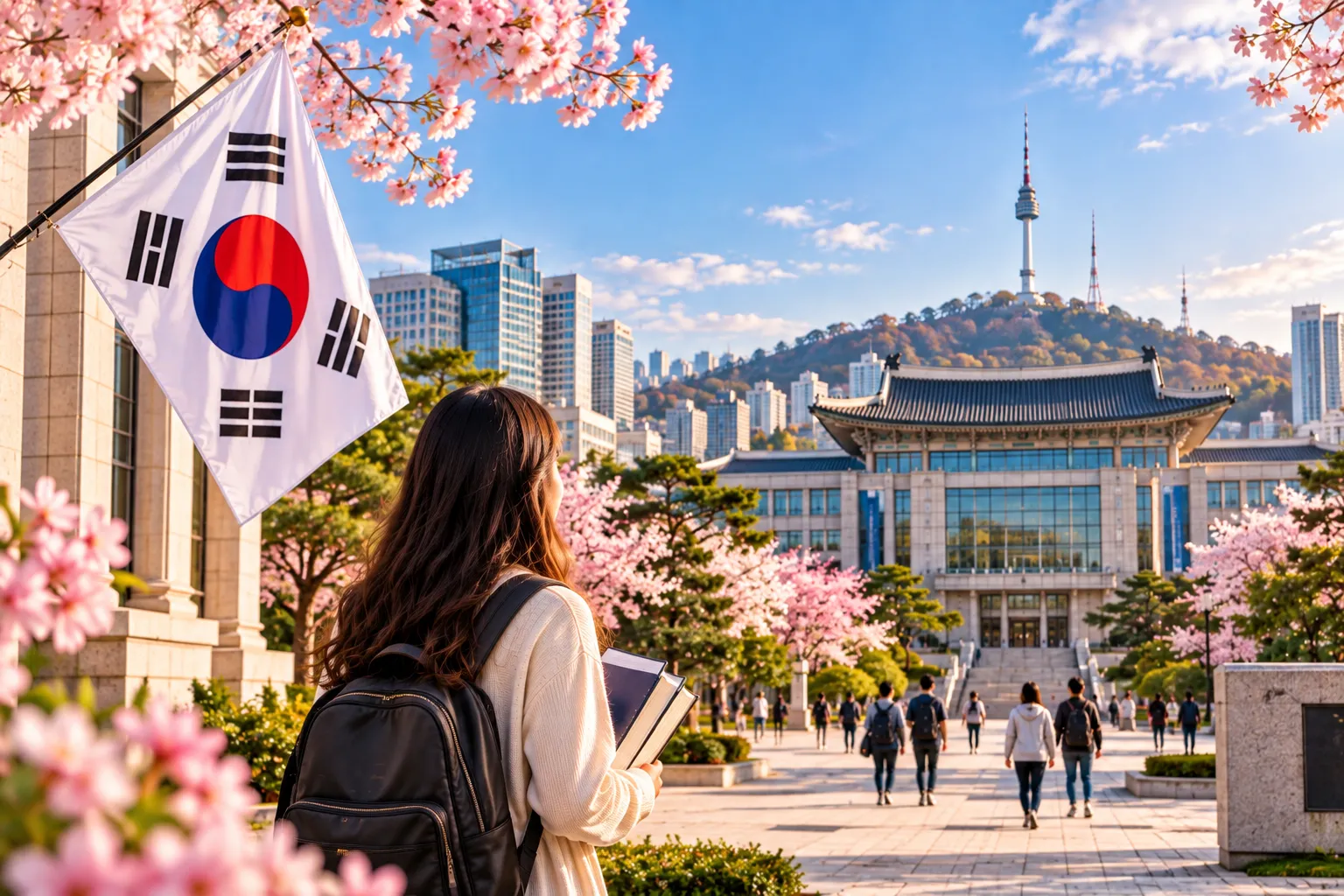
Study in South Korea
South Korea may suit students interested in advanced technology, creative industries and a fast-moving urban academic environment, provided they plan for language and culture carefully. Compare programmes, practical requirements and the decisions worth discussing before you apply.
Understand the destination, study options and student life.
- Student cities
- Seoul, Daejeon, Busan and Daegu
- Teaching languages
- Korean, with selected English-taught programmes
- Currency
- South Korean won (KRW)
- Typical duration
- Bachelor's degrees commonly take four years; master's degrees often take two years
- Main intakes
- Spring and autumn intakes are common, but dates vary by institution
- Region
- Asia
Why students consider South Korea
South Korea may suit students interested in advanced technology, creative industries and a fast-moving urban academic environment, provided they plan for language and culture carefully. It may be a fit for students who compare academic goals with language, city, budget and the practical realities of moving abroad.
A distinct academic setting
South Korea may suit students interested in advanced technology, creative industries and a fast-moving urban academic environment, provided they plan for language and culture carefully. Compare institution type, teaching approach and entry requirements rather than treating the country as one uniform option.
Subject areas to explore
Relevant areas may include engineering, technology, business, media, design and Korean language studies. The right choice depends on your background, level and longer-term direction.
City choice matters
Compare Seoul, Daejeon, Busan and Daegu for housing, transport, language environment and the kind of student routine you want.
A plan that can be checked
Use official institution and immigration information to test the academic, financial and visa assumptions behind your shortlist.
Best Courses to Study in South Korea
Admission requirements in South Korea for Pakistani students
Admission requirements vary by university and course, so students should check the specific requirements of their chosen programme before applying.
- Academic qualification relevant to the chosen course
- Academic transcripts and certificates
- Proof of English language proficiency, where required
- Valid passport or travel document
- Personal statement, motivation letter or study plan, where required
- Reference letters, where required
- Additional documents required by the university or course
Cost of studying and living in South Korea
Cost of studying in South Korea
Seoul can require a larger housing budget than regional cities. Include tuition, deposits, transport, insurance and daily costs in the comparison.
| Study programme | Average annual tuition fees |
|---|---|
| Bachelor's degree | ₩4,000,000–₩12,000,000 / year |
| Master's degree | ₩4,000,000–₩12,000,000 / year |
| Doctoral degree | ₩4,000,000–₩12,000,000 / year |
Figures are broad planning estimates. Actual fees vary by institution, programme, nationality and study level.
Cost of living in South Korea
Living costs in South Korea vary by city and lifestyle. The following figures provide a broad monthly planning range for a student and should be checked against current local accommodation and university guidance.
| Expense | Approximate monthly cost |
|---|---|
| Accommodation and utilities | ₩385,000–₩825,000 / month |
| Food & housekeeping | ₩126,000–₩270,000 / month |
| Transport | ₩42,000–₩120,000 / month |
| Mobile, study and personal expenses | ₩84,000–₩225,000 / month |
All figures are indicative planning estimates, not quotations.
Scholarships for Pakistani students in South Korea
The Global Korea Scholarship and university awards may be relevant for eligible applicants; requirements, timelines and selection are competitive.
| Scholarship | Details |
|---|---|
| Global Korea Scholarship | Global Korea Scholarship may provide funding for eligible international students. Check the current provider criteria, eligible nationalities, study levels and deadlines. |
| University scholarships | Many universities in South Korea offer their own scholarships, fee reductions or awards for eligible international students. Criteria vary by institution and programme. |
| External scholarships | External awards may be available through recognised organisations or funding providers. Eligibility, deadlines and funding levels vary. |
Job opportunities in South Korea for Pakistani students
South Korea offers students opportunities to develop practical experience through part-time work, internships, placements or graduate opportunities, depending on the programme and applicable rules. Universities may also provide careers support, employer events and guidance for students preparing for employment.
Work permissions and post-study options depend on the immigration rules that apply to the individual student and can change over time. Students should check current official guidance before relying on employment as part of their study or financial plan.
Student visa and preparation for studying in South Korea
International students who want to study in South Korea generally need the appropriate permission to study. The process normally begins with choosing an eligible course and institution, receiving the required admission documentation, and preparing the identity, financial and supporting documents required for the relevant application.
What to prepare
- A valid passport or travel document
- Admission or enrolment confirmation from the institution
- Evidence of required funds, where applicable
- Proof of language ability, where required
- Academic documents
- Any additional documents required for the individual application
Visa and residence requirements can change, so students should always check the latest official South Korea immigration guidance before submitting an application.
Questions students ask about South Korea
South Korea may suit students whose academic goals, language readiness, budget and preferred city align with the available programmes. Compare the exact course and institution rather than relying on a country-wide assumption.
South Korean won (KRW) Some programmes may be available in English while others require the local language.
Tuition and living costs vary by institution, programme and city. Use the figures on this page as an early planning range, then confirm current fees and accommodation costs with official sources.
Read the cost guideStart with admission, identity, financial and any language documents required for your course and immigration route. Official South Korea immigration guidance should be checked before submitting the application.
Visa guidanceThe Global Korea Scholarship and university awards may be relevant for eligible applicants; requirements, timelines and selection are competitive. Review each provider’s current criteria and deadline before planning around an award.
Scholarships and fundingCompare the curriculum, entry requirements, teaching language, accreditation or recognition, total cost, location, accommodation and intake dates. Then check the current official programme information before applying.
Personalised guidance
Need help studying in South Korea?
Get personalised guidance from our education consultants and take the next step with confidence.
Explore more
Explore other destinations
Keep your options open while you learn which country and study environment suit you best.